
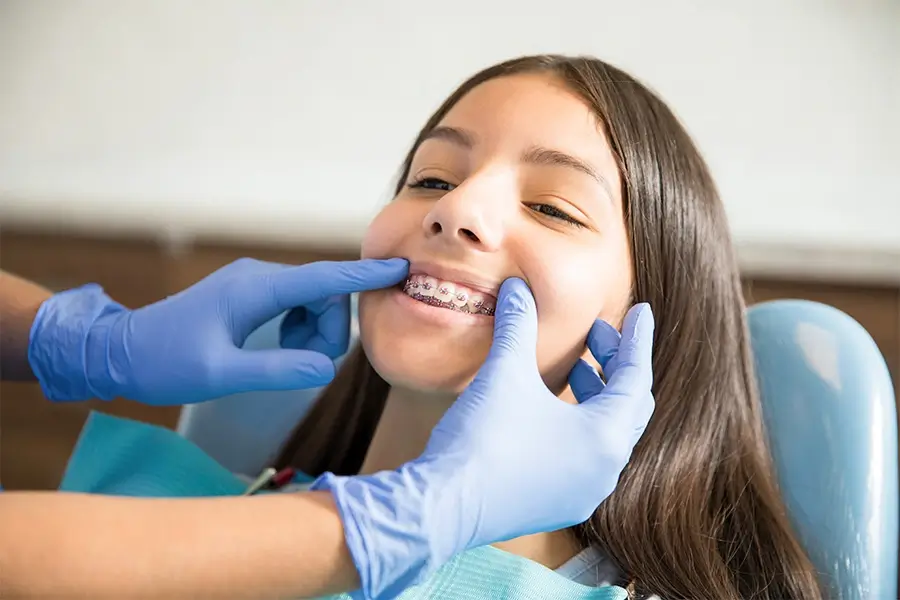
The Science Behind Straightening Your Smile
If you’ve ever looked in the mirror and wondered how a set of metal brackets and wires could possibly reshape your entire smile, you’re not alone. Braces are one of the most trusted orthodontic treatments in the world, yet most people have no idea what’s actually happening inside their mouths. Understanding how braces work can make the process feel a lot less mysterious — and a lot more exciting.
At 63 Family Dental’s braces program, our orthodontic team in Chicago guides patients through every step of the journey, from the first consultation to the moment the brackets come off. Whether you’re a parent exploring options for your child or an adult considering treatment for yourself, here’s a clear look at how braces do their job.
What Braces Are Made Of
Traditional braces consist of a few key components working together as a system:
- Brackets: Small square attachments bonded directly to the surface of each tooth.
- Archwire: A thin metal wire threaded through each bracket that acts as a track, guiding teeth into position.
- Elastic bands (ligatures): Tiny rubber bands that hold the archwire to each bracket.
- Bands and spacers: Metal rings placed around back molars to anchor the system in place.
Each of these components plays a specific role. Together, they create a continuous, gentle force on your teeth — and that force is the key to everything.
How Teeth Actually Move
Teeth aren’t fixed rigidly in your jawbone. They’re held in place by a cushion of tissue called the periodontal ligament, which connects the root of each tooth to the surrounding bone. When braces apply steady pressure to a tooth, this ligament stretches on one side and compresses on the other.
Your body responds by breaking down bone on the compressed side (a process called resorption) and building new bone on the stretched side (called bone deposition). Over time, the tooth migrates in the direction of the applied force, and new bone fills in behind it to hold it in its new position. It’s a slow, biological process — which is exactly why orthodontic treatment takes months or years rather than days.
Your orthodontist adjusts the archwire at regular appointments, gradually increasing the tension and steering each tooth along a carefully planned path. If you’re curious about what those appointments look like from start to finish, the post What to Expect When Getting Braces Put On in Chicago covers the process in helpful detail.
The Stages of Orthodontic Treatment
Stage 1: Leveling and Alignment
In the earliest phase, the goal is simply to align all teeth to the same level. Lighter, more flexible wires are used at this stage to begin moving teeth gently without overwhelming the surrounding tissues.
Stage 2: Correcting the Bite
Once teeth are reasonably level, your orthodontist focuses on how your upper and lower teeth come together — your bite. Elastics (rubber bands worn between upper and lower brackets) are often introduced here to correct overbites, underbites, or crossbites.
Stage 3: Finishing and Detailing
In the final phase, small adjustments are made to fine-tune tooth position and ensure everything fits together perfectly. This is the most precise stage, and it’s what separates a good result from a great one.
You can read a deeper breakdown of each phase in the blog post Braces in Chicago: What to Expect at Every Stage on our website, or explore what braces treatment looks like at every stage for a detailed walkthrough.
How Long Does Treatment Take?
Most patients wear braces for 18 months to 3 years, depending on the complexity of their case. Factors that influence treatment length include the severity of crowding or spacing, the type of bite issue present, patient age (younger patients’ bones are more adaptable), and how consistently patients follow care instructions — including wearing elastics as directed.
After braces come off, a retainer is essential. Without it, teeth have a natural tendency to drift back toward their original positions. Your orthodontist will prescribe a retainer schedule tailored to your needs.
Are Braces Right for You — or Would Clear Aligners Be a Better Fit?
Traditional braces are highly effective for a wide range of orthodontic issues, including complex bite corrections that may be difficult to achieve with removable aligners. That said, clear aligners like Invisalign® are an excellent option for many patients. Our team also offers Invisalign clear braces for patients who prefer a more discreet approach to straightening. The post Braces vs Clear Aligners: Which Is Better for You? explores this comparison in depth — worth a read if you’re weighing your options.
If you’re a parent wondering whether your child is ready for orthodontic treatment, the sibling post Signs Your Child Needs Braces: A Parent’s Guide can help you identify the early indicators that it’s time to consult an orthodontist.
Paying for Braces in Chicago
Cost is one of the most common concerns families have before starting orthodontic treatment. At 63 Family Dental, we work hard to make braces accessible. We accept the Medical Card and offer flexible financing options so that cost doesn’t have to stand between you and a healthier smile. You can also explore our guide to affordable braces in Chicago to understand what to look for when comparing your options.
Frequently Asked Questions
Do braces hurt?
Some discomfort is normal, especially in the first few days after braces are placed and after each adjustment appointment. Most patients describe it as a dull soreness or pressure rather than sharp pain. Over-the-counter pain relievers and soft foods can help during these periods.
At what age should someone get braces?
Orthodontic treatment is effective at nearly any age, but many orthodontists recommend an evaluation by age 7. Early assessment allows the orthodontist to monitor development and intervene at the optimal time. Adults can also benefit significantly from braces — it’s never too late.
Can I eat normally with braces?
You’ll need to avoid certain foods — particularly hard, sticky, or crunchy items that can damage brackets or wires. Popcorn, hard candies, chewing gum, and raw carrots are common examples. Your orthodontist will provide a full list of foods to avoid when treatment begins.
How do I keep my teeth clean with braces?
Good oral hygiene is especially important during orthodontic treatment because brackets and wires create more surfaces where plaque can hide. Brushing after every meal, using a floss threader or water flosser, and attending regular dental cleanings will help keep your teeth and gums healthy throughout treatment.
Does 63 Family Dental accept the Medical Card for braces?
Yes. 63 Family Dental proudly accepts the Medical Card (Medicaid) for qualifying orthodontic treatment, making braces accessible to more Chicago families. Contact our team to verify your coverage and learn about any additional financing options that may be available to you.
Ready to Start Your Smile Journey?
If you’re in the Chicago area and ready to learn whether braces are the right choice for you or your child, the team at 63 Family Dental is here to help. Our orthodontic specialists serve patients across the Southwest Side and beyond from our office at 6258 S Pulaski Rd. Call us at 773-777-6363 or request a free consultation online — and take the first step toward the smile you deserve.